
The olive oil tasting glass is a small, dark blue glass used by professional tasters all over the world. Its shape, its colour and its glass lid are not a whim: they are designed to concentrate the aromas of the oil and stop its colour from influencing the taster’s judgement. In this guide we explain what an official tasting glass is like, why it is blue, how to taste an oil step by step and how to organise an olive oil tasting at home with friends or family.
Contents
What an olive oil tasting glass is
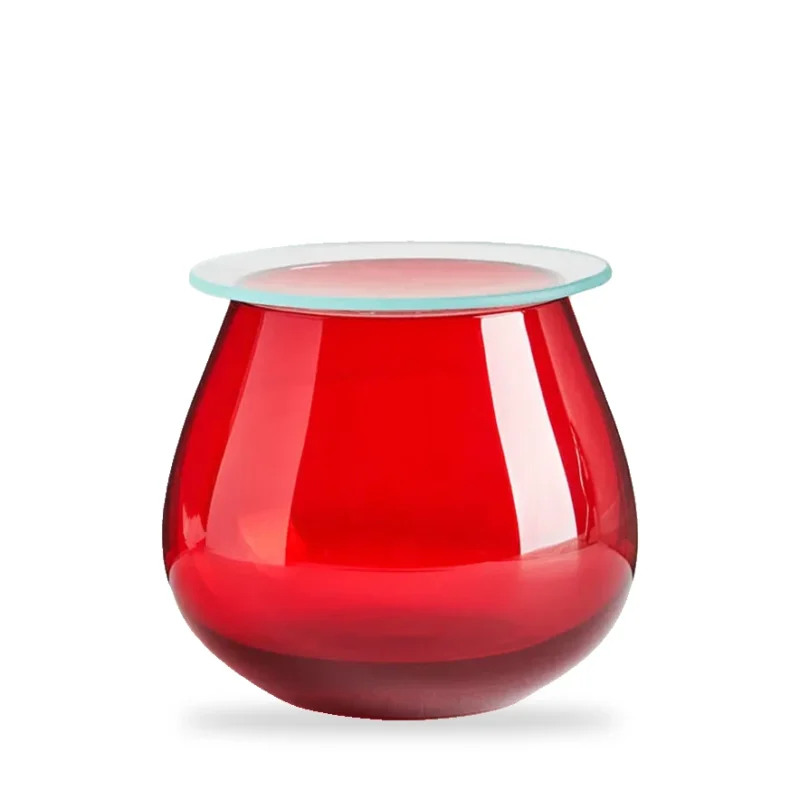
The olive oil tasting glass is a standardised vessel that allows the sensory qualities of a virgin olive oil to be assessed under the same conditions in any laboratory in the world. Its features are defined by the International Olive Council in a specific standard on the glass for oil tasting.
Unlike a wine glass, the olive oil tasting glass is small, low and rounded, without a long stem. It has a wide base that sits comfortably in the palm of your hand and a mouth narrower than its body. That shape has three purposes:
- Warming the oil with your hand. The rounded base fits in your palm, so you can bring the oil up to tasting temperature.
- Concentrating the aromas. The narrow mouth holds in the volatile compounds and directs them to your nose when you lift the lid.
- Stability. It is hard to knock over, which matters when you are handling several glasses at once.
Each tasting glass is filled with about 15 millilitres of oil, roughly a tablespoon, enough to smell and taste several times. Because the amount is so small, you can compare several oils in one sitting without wasting any of your best bottles.

Why the olive oil tasting glass is blue
This is the most common question. The answer is simple: the dark blue colour hides the colour of the oil. That way the taster cannot tell whether the oil is deep green or golden, and their assessment is not swayed by preconceived ideas.
Many people associate green with higher-quality oils, and gold with milder or lower-quality ones. But colour depends on the variety and the timing of the harvest, not on quality. A golden oil can be excellent and a very green one can have defects. With a blue tasting glass, the oil is judged only by its smell and taste, which is exactly how it should be: what matters is what you perceive in the nose and on the palate.
For the same reason, official tastings are carried out under neutral light, in individual booths and without the taster knowing the brand or origin of the oils. If you want to know what colour really tells you, we explain it in our guide to acidity and olive oil quality.
The watch glass: the lid of the olive oil tasting glass
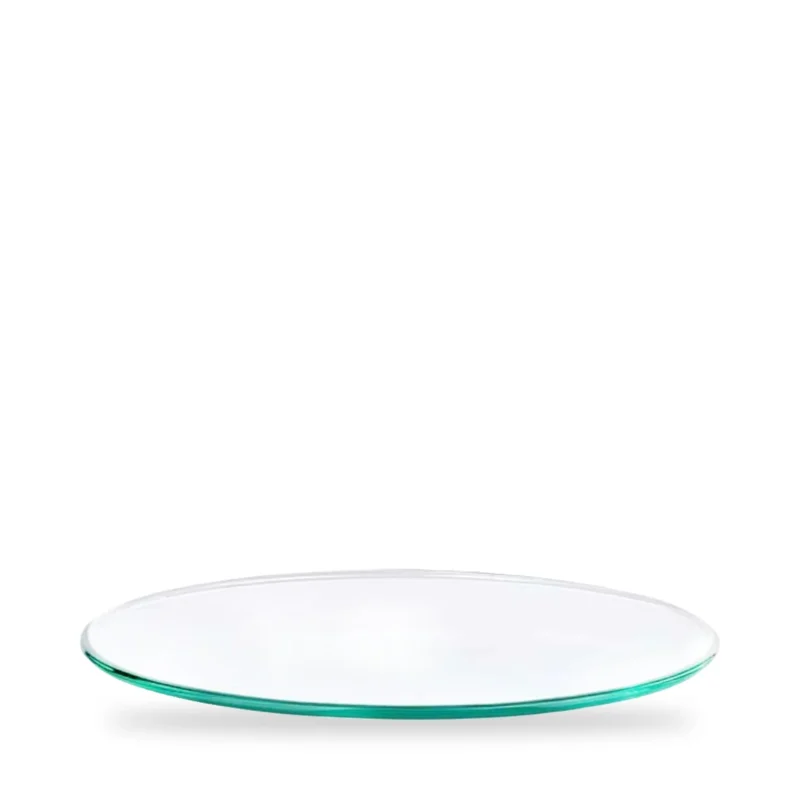
The tasting glass comes with a watch glass, a slightly curved glass disc that sits over the mouth of the glass. Its name comes from its resemblance to the glass that protects the face of a watch.
The watch glass plays a key role: while you warm the glass in your hand, the aromas of the oil are released and trapped inside. When you lift the lid, all those volatile compounds reach your nose at once and are much easier to perceive. Without a lid, many of the most delicate aromas would simply escape into the room before you had a chance to notice them.
If you want to taste like the professionals, in our shop you will find the gift box of 6 tasting glasses with 6 watch glasses and, if you already have glasses, watch glasses in packs of 10.
How to taste an oil with the olive oil tasting glass, step by step
Tasting an oil may seem complicated, but you can learn it in a few minutes. Follow this method, which is the same one used by tasting panels:
- Pour the oil. Put about 15 ml into the tasting glass and cover it with the watch glass.
- Warm the glass. Hold it in the palm of one hand and cover it with the other. Swirl it gently for one or two minutes. The aim is for the oil to reach about 28 °C, the temperature at which its aromas are best released.
- Smell. Uncover the glass, bring it to your nose and take gentle, deep breaths. Cover it again between breaths. Note what you perceive: grass, leaf, tomato plant, apple, almond, banana.
- Taste. Take a small sip, about 3 ml, and spread it all around your mouth so that it reaches every part of your tongue.
- Draw in air. With your teeth almost closed, gently suck in air between them several times. This technique, which makes a little noise, carries the aromas to your nose retronasally.
- Assess bitterness and pungency. Bitterness is felt at the back of the tongue; pungency in the throat, sometimes a few seconds later.
- Cleanse your palate. Between oils, eat a piece of green apple and drink a little water at room temperature.
Tasters recommend tasting in the morning, when your senses are sharpest, and not smoking, drinking coffee or eating strong foods in the half hour beforehand. It is also best not to wear perfume. The room should be quiet and free of cooking smells, so that nothing competes with the aromas in the olive oil tasting glass.
The vocabulary of olive oil tasting
To describe what you perceive in the tasting glass, it helps to know a few of the terms tasters use:
- Almond. Reminiscent of fresh or toasted almond. Common in Hojiblanca and Arbequina.
- Grass. The smell of freshly cut grass, typical of early harvest oils.
- Olive leaf. A green, slightly astringent vegetal aroma.
- Tomato plant. Reminiscent of the tomato plant, especially its leaves and stems. Very typical of Picual.
- Artichoke. A slightly bitter vegetal note found in many green oils.
- Apple. A fruity aroma, green or ripe, common in Arbequina and Picudo.
- Banana. A ripe fruit note, characteristic of some varieties such as Royal.
- Balanced. When fruitiness, bitterness and pungency are in harmony and none dominates.
- Persistent. When the sensations stay in the mouth for a good while after swallowing.
At first you will find it hard to put a name to what you smell. That is normal: after a few olive oil tastings you will build up your own memory of aromas. A good exercise is to smell the real thing, such as a tomato leaf, a green apple or a fresh almond, and then look for that aroma in the glass.
A little history: from wine glass to olive oil tasting glass
For a long time, oils were tasted informally, with bread or straight from a spoon. Every mill and every family had its own way of judging an oil, and opinions varied as much as the oils themselves. As extra virgin olive oil became a product of distinctive quality, the sector needed an objective method to classify it.
In the eighties and nineties, the International Olive Council developed the sensory analysis of olive oil, with standards for the tasting room, the training of tasters and the tasting vessel. That is how the standardised tasting glass was born, the one used today by official panels all over the world and by many enthusiasts too.
Positive attributes tasters look for
In an official olive oil tasting, three main positive attributes are assessed:
Fruity
This is the set of aromas reminiscent of healthy, fresh olives. It can be green fruitiness, with notes of grass, leaf, tomato plant, artichoke or green almond, typical of olives picked early; or ripe fruitiness, with notes of ripe fruit, banana or nuts, typical of riper olives.
Bitter
This is the characteristic bitter taste of oil from green olives. It is felt at the back of the tongue and is a sign of freshness and of a high polyphenol content.
Pungent
This is a tactile sensation, like a tickle, that appears in the throat. It is also linked to polyphenols and is very intense in early harvest oils.
A great oil combines these three attributes in balance. An oil that is very fruity but has no bitterness or pungency can feel flat, while one where bitterness dominates everything can be hard to enjoy. Tasters also value aromatic complexity, persistence in the mouth and overall harmony. You can discover the difference between styles by comparing oils from different olive oil varieties.
Olive oil defects the tasting glass reveals
The tasting glass is not just for enjoying aromas: it is also the tool for detecting defects. These are the most common:
| Defect | What it is reminiscent of | Cause |
|---|---|---|
| Fusty or muddy sediment | Fermented olives, table olives in brine | Olives piled up for days before milling, or oil left in contact with its sediment. |
| Musty-humid | Mould, damp, wet earth | Olives attacked by fungi after being stored in damp conditions. |
| Winey-vinegary | Wine, vinegar, acetone | Fermentation of the olives producing acetic acid and ethanol. |
| Rancid | Stale walnuts, wax, paint | Oxidation of the oil by light, heat or air. |
| Frostbitten | Damp wood | Olives damaged by frost on the tree. |
An oil with any of these defects can no longer be considered extra virgin. Rancidity in particular can appear in an oil that was excellent but has been badly stored. We explain how to avoid it in our guide on how to store olive oil and its shelf life.
How a professional tasting panel works
The official classification of an oil as extra virgin depends on an accredited tasting panel made up of between 8 and 12 selected and trained tasters. Each works in an individual booth, with their own blue tasting glass, and fills in a profile sheet scoring the intensity of each attribute and each defect.
The panel leader calculates the median of the scores. If the median of the defects is zero and that of fruitiness is greater than zero, the oil is extra virgin. If there are slight defects, it will be virgin. If they are significant, it will be lampante, and it cannot be sold without being refined.
This method, known as the panel test, is recognised by the International Olive Council and by EU rules, and it is as important as the chemical analyses. Tasting rooms must meet requirements for lighting, temperature and ventilation so that results can be compared. It is a demanding system, but it is what gives the words “extra virgin” on a label their real meaning.
How to organise an olive oil tasting at home
An olive oil tasting is a wonderful thing to share with friends, with family or as an activity at a celebration. This is what you need:
What you need
- One tasting glass per person and per oil, or a set of glasses that you wash between oils.
- Three or four oils of different styles: for example, a mild Arbequina, a balanced Hojiblanca and an intense Picual.
- Chopped green apple and water at room temperature to cleanse the palate.
- A sheet of paper to note down your impressions of each oil.
- Unsalted white bread, for the second part of the tasting.
How it works
- Number the glasses and pour the oils without showing the bottles, from the mildest to the most intense.
- Taste each oil following the tasting glass steps: warm, smell, taste and assess.
- Note what each oil reminds you of and score fruitiness, bitterness and pungency from 1 to 10.
- Share your impressions and reveal the bottles at the end.
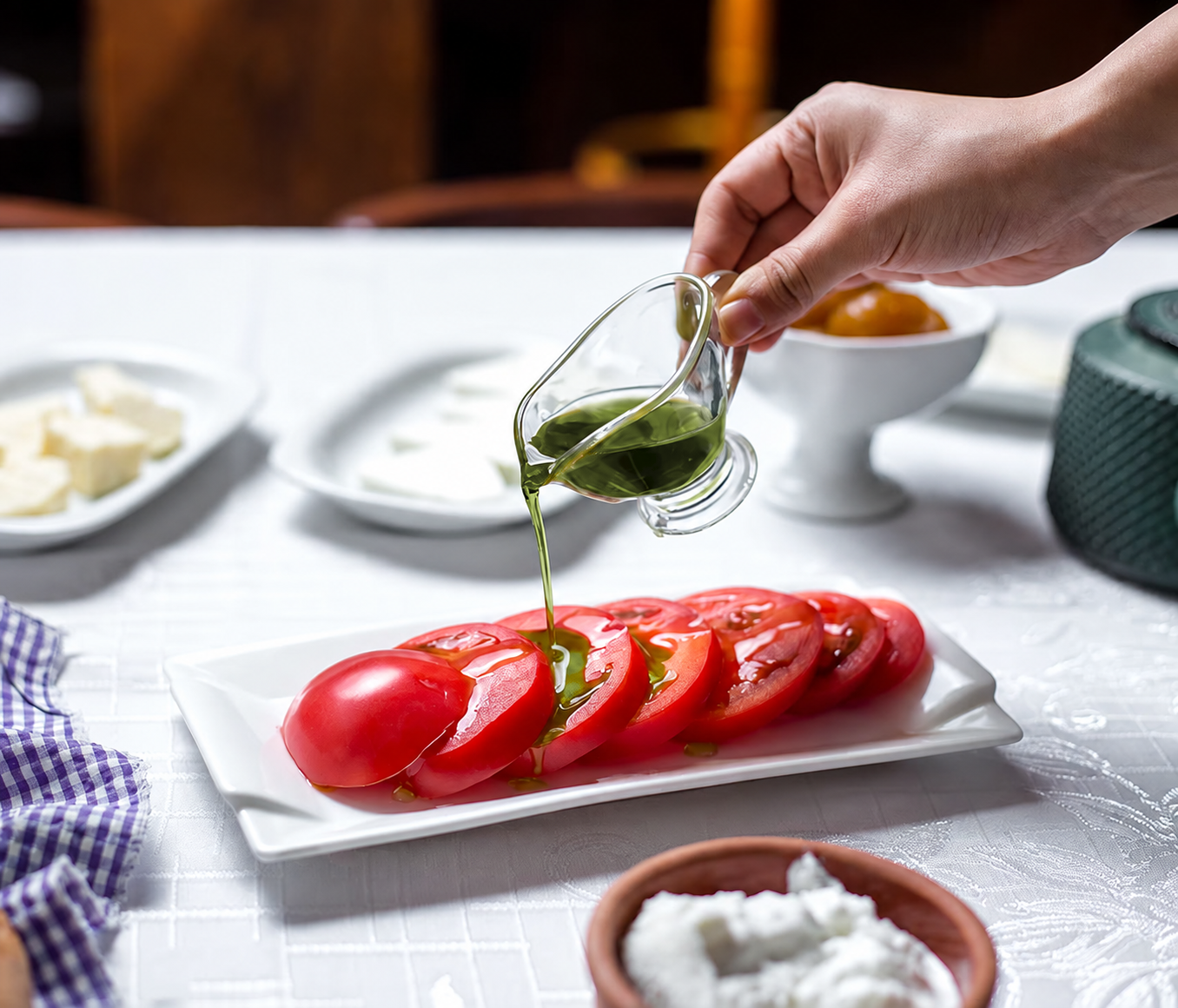
- Finish by trying the oils on bread, tomato or fresh cheese, to see how they change with food. You will often find that the oil you liked least on its own shines brightest with the right dish.
To get started, our variety packs are a convenient way to bring together different oils. And if you want an original present, a box of tasting glasses with a couple of oils is a much-appreciated gift; you will find more ideas in our guide to olive oil gifts.
A taster’s tip
Do not worry about getting it right. Tasting is a memory exercise: the more oils you taste, the easier it becomes to recognise aromas. Start by comparing just two very different oils.
Alternatives to the olive oil tasting glass
If you do not have a tasting glass yet, you can start with what you have at home. A small glass, such as a wide shot glass, is fine for smelling and tasting. To hide the colour, use an opaque glass or ask someone to pour the oils without you seeing them.
For tastings with lots of people, at events or fairs, there are single-use compostable cups with lids, which save you washing dozens of glasses. Tasting plates, on which the oil is served to try with bread, are also useful, such as the olive oil tasting plate.
Even so, if you want to appreciate every nuance and taste under the same conditions as the professionals, nothing replaces an official tasting glass with its watch glass. Once you have tried both, the difference in how clearly you perceive the aromas is striking.
How to clean and store your tasting glasses
To stop your tasting glasses passing smells on to the next oils, clean them thoroughly after each use:
- Wipe out the oil with kitchen paper.
- Wash them in hot water with an unscented neutral detergent.
- Rinse them well so that no trace of soap remains.
- Leave them to dry upside down or dry them with a lint-free cloth.
- Store them in their box or in a cupboard free of strong smells.
Avoid scented detergents and fabric softener on your tea towels, because the glass can hold on to those smells and confuse you at the next tasting. Even a faint trace of lemon or lavender can be mistaken for an aroma of the oil.
If you taste often, keep a set of glasses just for olive oil and do not use them for other drinks. Before each tasting, smell the empty glasses: they should smell of nothing. With this care, a good-quality tasting glass will last you many years and accompany you through hundreds of olive oil tastings.
Taste like a professional. Official tasting glasses, watch glasses and extra virgin olive oils of different varieties to discover their differences, with fast dispatch within 24/48 h from Spain.
Frequently asked questions about the olive oil tasting glass
Why is olive oil tasted in blue glasses?
Because dark blue glass hides the colour of the oil. That way the taster judges only its smell and taste, without being swayed by the colour.
How much oil goes into a tasting glass?
About 15 ml, roughly a tablespoon. That is enough to smell and taste several times.
At what temperature is olive oil tasted?
At about 28 °C. You reach it by warming the covered glass in the palm of your hand for one or two minutes.
What is the watch glass for?
To cover the glass while the oil warms up, so that the aromas are concentrated and easier to perceive when you lift it.
Can you taste olive oil without a tasting glass?
Yes, with a small glass. But the official olive oil tasting glass makes it easier to warm the oil, concentrates the aromas and hides the colour.
With an olive oil tasting glass and a little practice, you will discover that every oil has its own personality. Start your own olive oil tasting today and learn to choose the one you like best. Whether you are a curious beginner or a seasoned food lover, the olive oil tasting glass is the simplest tool for turning every bottle into a small discovery.