
Jaén olive oil is famous all over the world, and not by chance. The province of Jaén is the largest olive-growing area on the planet: a sea of olive trees covering mountains and farmland that, in a normal season, produces close to half of Spain’s olive oil. In this guide we tell you what makes olive oil from Jaén special, what it tastes like, which designations of origin it has, how to recognise a good Jaén olive oil and where to buy it with confidence.
Contents
Jaén, the sea of olive trees
Anyone who travels through the province of Jaén quickly understands why it is called the sea of olive trees. From the Cazorla and Segura mountains to the Guadalquivir lowlands, olive trees fill almost the entire landscape. There are more than 60 million trees planted across hundreds of thousands of hectares.
In a normal season, Jaén produces around half of Spain’s olive oil and about a fifth of the world’s olive oil. No other province or region comes close. For anyone who loves olive oil, these figures simply mean that Jaén is the natural place to start. It is no surprise that the city of Jaén presents itself as the world capital of olive oil.
Olive growing is not just an economic activity: it is the way of life of thousands of families. The harvest, between October and February, sets the calendar of entire villages. And olive oil culture runs through the food, the festivals and even the poetry: the verses of “Aceituneros” (“Olive pickers”) by Miguel Hernández, with the famous line “Andaluces de Jaén, aceituneros altivos” (“Andalusians of Jaén, proud olive pickers”), are regarded as the anthem of the province.

A history going back centuries
The olive tree has been grown in the south of the Iberian Peninsula since ancient times. Phoenicians and Greeks spread it across the Mediterranean, and the Romans made it a major crop: oil from Baetica, today’s Andalusia, travelled in amphorae all the way to Rome. Later, Arab influence left its mark on the language: Spanish words such as aceite (oil), aceituna (olive) and almazara (olive mill) come from Arabic.
However, the great sea of olive trees that defines Jaén today is relatively recent. It took shape mainly between the nineteenth and twentieth centuries, as olive groves gradually replaced other crops until they covered almost the whole province. Since then, the history of Jaén and the history of its olive oil have gone hand in hand, and it is hard to imagine one without the other.
In recent decades the sector has been through a real quality revolution. Many cooperatives and family mills have modernised their facilities, brought the harvest forward and committed to extra virgin olive oil bottled under their own brand. Thanks to this, Jaén olive oil has earned a place among the best in the world. Today, many of the bottles you see on the shelves of fine-food shops abroad began their journey in a small mill in this province.
Mountain and lowland: two styles of Jaén olive oil
Although almost all the province’s olive groves are Picual, olive oil from Jaén does not taste the same everywhere. Broadly speaking, there are two landscapes:
- The mountains. Mountain groves, often on slopes and terraces, with cold nights and poor soils. They give fresh, very aromatic oils with notes of grass and tomato plant and an elegant bitterness. The province’s four designations of origin are all in mountain areas.
- The lowlands. The flat, fertile land around the Guadalquivir, with more productive groves. Their oils tend to be more powerful, with intense bitterness and pungency and plenty of body.
Between these two extremes there are countless nuances, depending on the village, the orientation of the slope and, above all, the work of each mill. Tasting Jaén olive oils from different areas is a wonderful way to discover the diversity of a province that, seen from afar, looks like one single olive grove.
Why Jaén olive oil is so special
The quality of Jaén olive oil comes from a combination of several factors:
- The Picual variety. It is the great star of Jaén’s olive groves. It gives intense, very stable oils rich in polyphenols.
- The climate. Hot, dry summers, cold winters and a big difference in temperature between day and night help concentrate the aromas in the olive.
- Altitude. Many groves lie between 400 and more than a thousand metres above sea level, especially in the mountains. Mountain oils tend to be fresher and more aromatic.
- The soils. Clay and limestone in the lowlands, poorer and stonier in the mountains. Each soil leaves its mark on the oil, which is why two neighbouring villages can produce noticeably different Picuals.
- Tradition and innovation. Generations of olive growers work alongside modern mills committed to quality: early harvest, milling on the same day and cold extraction.
In recent decades, Jaén olive oil has gone from being sold mainly in bulk to leading premium extra virgin olive oil brands that win international awards every year. For you as a buyer, this means more choice than ever, and more chances to find an oil that matches your taste exactly.
Picual, the queen variety of Jaén olive oil
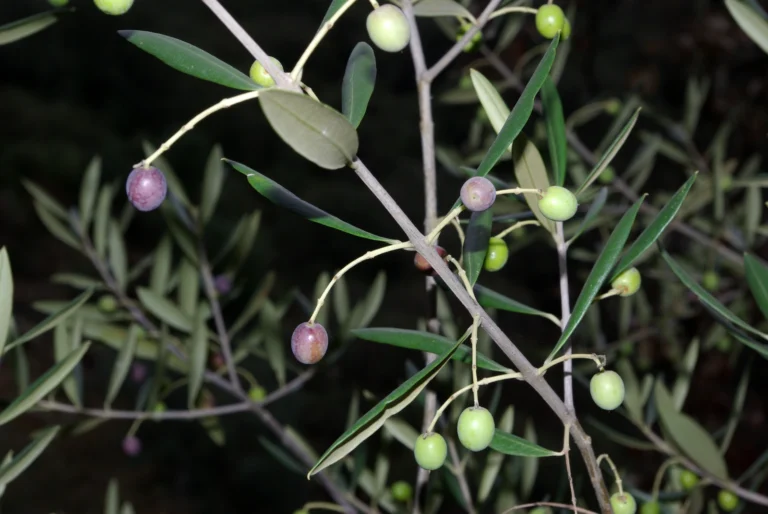
The vast majority of Jaén’s olive trees are of the Picual variety. Its name comes from the shape of the olive, which ends in a small point (pico in Spanish). It is the most widely grown variety in Spain and one of the most prized for its character and stability.
Picual oil is rich in oleic acid and polyphenols. This gives it an intense flavour and great resistance to oxidation: it stands up very well to the passing of time and to the high temperatures of the frying pan. That is why it is a perfect oil both raw and for cooking and frying. If you only want one bottle in your kitchen, a good Picual from Jaén is a very safe choice.
As well as Picual, Jaén also grows other varieties such as Royal, native to the Sierra de Cazorla, and, to a lesser extent, Arbequina, Hojiblanca and Picudo. If you want to know how they differ, see our guide to olive oil varieties.
What Jaén olive oil tastes like
A good olive oil from Jaén made with Picual has an unmistakable profile:
- On the nose: intense green fruitiness, with aromas of freshly cut grass, olive leaf, tomato plant, fig tree and, sometimes, artichoke or green almond.
- On the palate: a slightly sweet start, followed by marked bitterness and a pungency that appears at the end, in the throat.
- Persistence: long, with a very clean green aftertaste.
The intensity depends on when the olives are picked. Early harvest oils, made in October and November with green olives, are the most powerful and aromatic. Those from a later harvest are milder and rounder. We explain this in our guide to new harvest and early harvest olive oil.
If you are used to mild oils, you may be surprised the first time you taste an early Picual from Jaén. That bitterness and pungency are not defects: they are signs of a fresh oil rich in phenolic compounds.
To appreciate all these nuances, taste the oil on its own, in a small glass or on a piece of unsalted white bread. Warm the glass in your hand, smell it calmly and let the oil spread all around your mouth. If you want to do it like professional tasters, we explain the method in our guide to the olive oil tasting glass. Comparing two or three Jaén olive oils at once is the quickest way to learn to tell them apart.
The designations of origin of Jaén olive oil
Four Protected Designations of Origin (PDO) cover extra virgin olive oils produced in the province. Each guarantees the origin of the oil and additional quality controls:
| Designation | Area | Character |
|---|---|---|
| Sierra de Segura PDO | North-east of the province, in the Segura and Las Villas mountains | Fresh, aromatic oils from mountain groves. |
| Sierra de Cazorla PDO | The Cazorla area, next to the Natural Park | Picual and the native Royal, with very fruity oils. |
| Sierra Mágina PDO | Centre and south of the province, around the Mágina massif | Balanced oils, with green fruitiness and medium bitterness. |
| Jaén Sierra Sur PDO | South of the province, in the Sierra Sur de Jaén | Intense, complex oils from mountain groves. |
An oil with a designation of origin carries the designation’s seal and its control number on the label. Not every great Jaén olive oil belongs to a designation, but when it does, you have an extra guarantee of where it comes from. Comparing oils from two different designations is also a lovely way to see how much the mountains of each area influence the flavour.
Recognised quality: Jaén Selección and awards
Every year, the Provincial Council of Jaén organises the Jaén Selección award, which uses blind tasting to choose the best extra virgin olive oils in the province. The selected oils become ambassadors for Jaén olive oil at fairs and promotions all over the world. If you see the Jaén Selección mark on a bottle, you know it has passed a demanding blind tasting against the best oils of the province. You can see the editions on the website of the Diputación de Jaén.
In addition, oils from Jaén appear every year among the most decorated in international quality competitions. Many Jaén mills have gone in just a few years from selling in bulk to creating brands recognised by chefs and tasters around the world.
The city of Jaén is also home to Expoliva, one of the most important international olive oil fairs, which brings together producers, machinery, research and gastronomy every two years.
Where to buy Jaén olive oil
Today it is easy to find Jaén olive oil in any supermarket, but not all oils are equal. These tips will help you buy well, whether you shop locally or order online from abroad:
- Look for “extra virgin olive oil”. It is the only category that keeps all the flavour and natural compounds of the olive.
- Check the origin. The label must show the origin. Look for a mention of Jaén, one of the province’s designations of origin or the name and town of the mill.
- Look at the harvest. The more recent, the more aroma. Many producers now show the season, for example “2026/2027 Harvest”.
- Choose the size to suit how much you use. Dark glass bottles for raw use, and tins or larger bottles for everyday cooking.
- Buy from a specialist shop. A shop that selects its oils and knows the producers offers more choice, better storage and advice. It also means the oil has been looked after properly before it reaches you.
In our online shop we bring together olive oils from Jaén made by family mills, cooperatives and big premium brands. We offer fast dispatch within 24/48 h from Spain, delivered by UPS to the UK and across Europe.
Jaén olive oils in our shop
These are some of the Jaén olive oils you can buy at Aceite Oliva Online:
- Pintarré. Organic and early harvest oils, including an unfiltered Picual and a veraison oil.
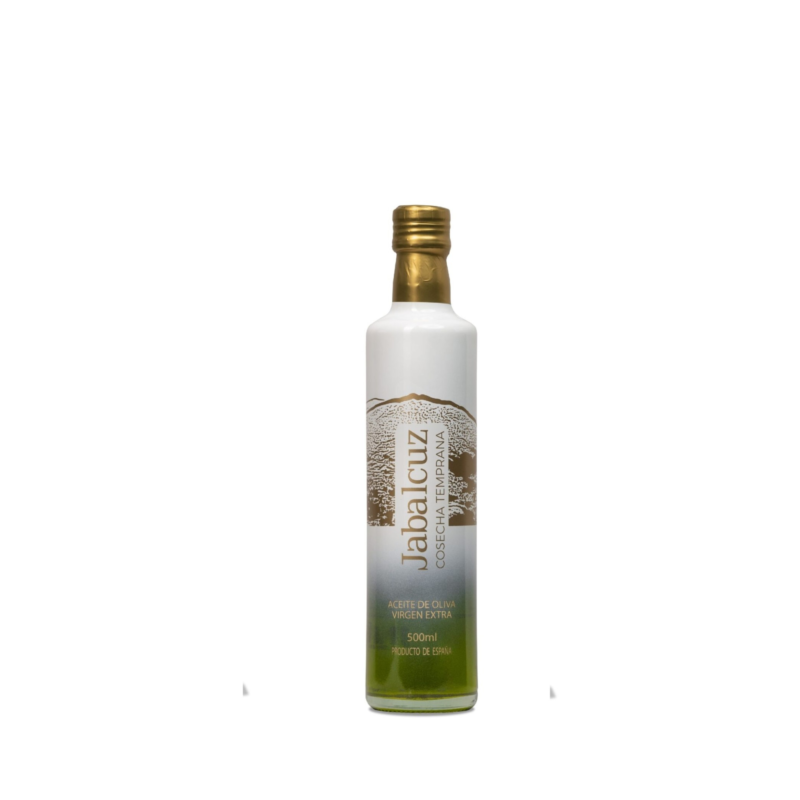
- Jabalcuz. Early harvest Picual with a very intense green fruitiness.
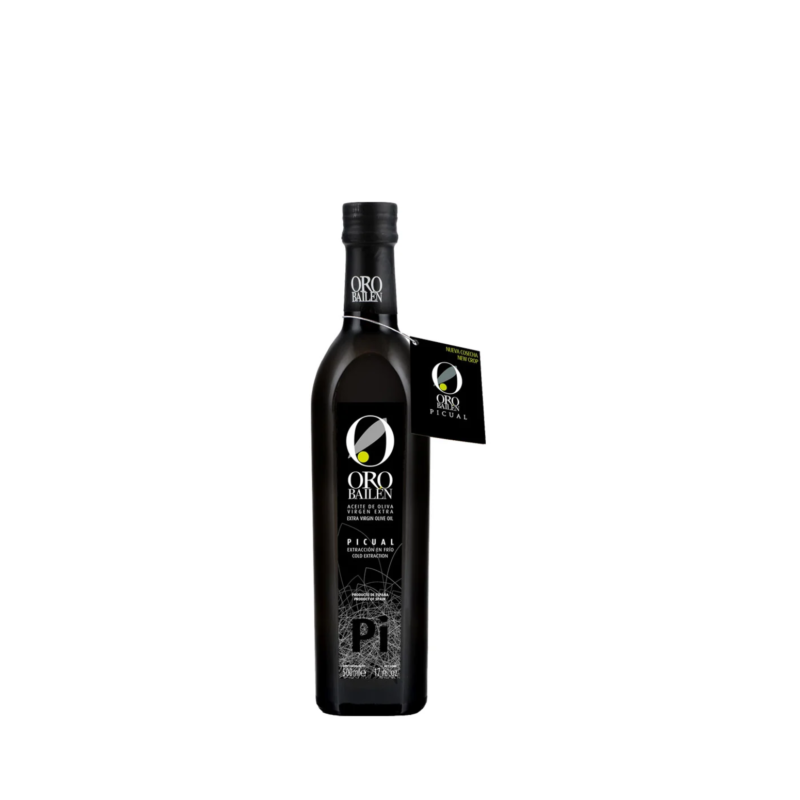
- Oro Bailén. One of the most decorated mills in the province, with Picual, Arbequina and other varieties.
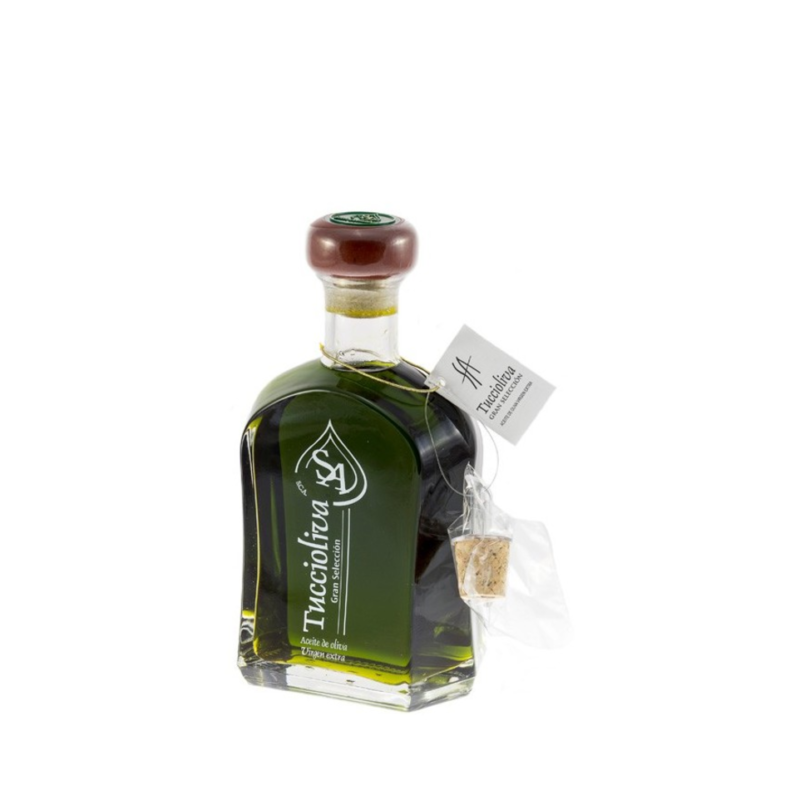
- Tuccioliva. Picual from Martos in designer bottles, ideal as gifts.
- Elizondo. Premium Picual and Royal, as well as flavoured oils.
- Casa del Agua, Noviembre, Elogio and Señorío de Camarasa. Picuals from Jaén in different styles, from the freshest to the most balanced.
- Peña de Martos, Aceituno and Romances de Moral. Jaén olive oils in sizes for everyday use and for restaurants.
You can see all the brands on our brands and mills page.
Jaén olive oil in the kitchen
Jaén’s cooking is unthinkable without olive oil. These are some traditional dishes in which Jaén olive oil takes centre stage:
- Pipirrana. A cold salad of tomato, pepper, onion, hard-boiled egg and tuna, dressed with plenty of Picual oil.
- Ochíos. Typical bread rolls from Úbeda and Baeza, made with olive oil and sprinkled with paprika and salt.
- Andrajos. A stew of flour pasta sheets with salt cod or hare, a favourite on cold days.
- Espinacas esparragadas. Stewed spinach with a paste of fried bread, garlic and spices.
- Toast with olive oil. The simplest breakfast and, for many, the best: bread, Jaén olive oil and, perhaps, tomato or a little salt.
Whatever you cook, the character of Picual also shines in dishes from other cuisines: chargrilled meat, roast vegetables, pulses, gazpacho and fried food. You will find ideas in our recipes with extra virgin olive oil.
A tip
If Jaén olive oil feels too intense at first, start with a later-harvest Picual or a blend. Within a few weeks you will notice your palate starting to ask for more character. Many people who start with mild oils end up preferring the green intensity of an early Picual.
How to store your Jaén olive oil
An olive oil from Jaén made with Picual is very stable, but it still needs some care to keep its fruitiness. Keep it in a cool, dark place, away from the hob, and close the container tightly after each use. If you buy tins or large bottles, decant it little by little into a dark glass oil cruet. That way only a small amount is exposed to air and light each time you cook.
Once opened, ideally use it within a few months to enjoy all its aroma. We give you all the details in our guide on how to store olive oil and its shelf life.
Visiting the land of olive oil
If you want to discover Jaén olive oil at its source, the province offers much more than olive groves: monumental towns such as Úbeda and Baeza, both World Heritage Sites; the Sierras de Cazorla, Segura y Las Villas Natural Park; olive oil museums and mills that open their doors to visitors.
We tell you all about it, with routes and the Olive Oil Greenway, in our guide to olive oil tourism in Jaén.
The best Jaén olive oil, straight from the mill to your home. Picual, Royal and early harvest oils from selected producers, with fast dispatch within 24/48 h from Spain.
Frequently asked questions about Jaén olive oil
Why is Jaén olive oil so famous?
Because Jaén is the world’s largest olive oil producer and because its main variety, Picual, gives intense, stable, high-quality oils. Many of its mills are among the most decorated.
Which olive variety is used in Jaén?
Mainly Picual, by a very long way. Royal, native to Cazorla, and other varieties are also grown in smaller quantities.
How many designations of origin does Jaén olive oil have?
Four: Sierra de Segura, Sierra de Cazorla, Sierra Mágina and Jaén Sierra Sur.
Is olive oil from Jaén good for frying?
Yes. Picual is one of the most heat-stable varieties, thanks to its high content of oleic acid and polyphenols.
When is the best time to buy Jaén olive oil?
At the start of the season, between October and December, when new harvest oils arrive. But a good oil that is well stored is excellent all year round.
Jaén olive oil is much more than a product: it is a landscape, a culture and a way of life. Taste it, compare its styles and discover why the sea of olive trees gives some of the best oils in the world. Whether you choose a fresh mountain Picual, a rare Royal from Cazorla or a powerful oil from the lowlands, every bottle tells you something about the land it comes from.