New harvest olive oil is the most eagerly awaited moment of the year for anyone who cooks with good extra virgin olive oil. Between October and December, Spanish mills turn freshly picked olives into intense, green oils full of aroma which, over the months, will gradually mellow. In this guide we explain when the 2026/2027 new harvest arrives, what early harvest means, how to spot a fresh oil on the label and how to store it so you can enjoy it all year round.
Contents

What new harvest olive oil is
In the olive oil world, the year does not begin in January. The olive oil season runs from 1 October to 30 September of the following year, which is why harvests are named with two years, such as the 2026/2027 new harvest. The first year shows when picking began; the second, when the marketing season ends.
Extra virgin olive oil is, quite literally, olive juice obtained by mechanical means only. It is not refined or blended with other oils. That is why it keeps the aromas of the fruit and, like any natural juice, is at its best when it is fresh.
When we talk about new harvest olive oil we mean oil from the current harvest, as opposed to oil made in the previous season that has already spent a year in the mill’s tanks or in the bottle. Both can be extra virgin, but they do not taste the same. Think of it like the difference between a freshly squeezed orange juice and one that has been in the fridge for a while: both are still juice, but one is noticeably livelier.
Freshly made oil is greener, fruitier, more bitter and more peppery. Over the months these attributes soften naturally. That does not mean last year’s oil is bad: it means new harvest olive oil offers a different, more intense experience, one that many enthusiasts look forward to all year. For many households in Spain, opening the first bottle of the season is a small ritual, often celebrated with nothing more than bread, oil and a pinch of salt.
The 2026/2027 new harvest calendar
The exact date depends on the variety, the area, the altitude and the weather each year, but the general calendar in Spain is fairly stable. Here it is in a table:
| Period | What happens in the grove and the mill | What oil you will find |
|---|---|---|
| Late September and October | The olives begin to turn from green to purple (veraison). Some mills start the early harvest. | The first early harvest oils, in very limited quantities. |
| November | Harvesting becomes widespread in Jaén, Córdoba and the rest of Andalusia. | Most new harvest oils reach the shops. |
| December to February | The riper olives and the bulk of production are picked. | Milder, sweeter oils, with higher yields. |
| March to September | The oil rests in tanks protected from light and oxygen. | It is bottled as it sells, keeping its quality. |
In practice, the first new harvest oils reach our extra virgin olive oil shop between late October and November. From then on they share the shelves for a few weeks with oils from the previous season, which gradually sell out.
If you would like to know more about how seasons are organised and about world production figures, the International Olive Council publishes its balances and forecasts every year.

Early harvest: the first new harvest olive oil
Within the new harvest there is one oil that is especially sought after: early harvest oil, also called green oil or veraison oil. It is made from olives picked before they are fully ripe, while they are still green or just beginning to change colour.
Green olives contain less oil than ripe ones. Filling a bottle of early harvest oil takes many more kilos of fruit, which is why these oils are scarce and a little more expensive. In return, they concentrate the greatest aromatic intensity of the year. If you only buy one special bottle each season, an early harvest oil is usually the one that shows most clearly what makes new harvest olive oil so exciting.
What an early harvest oil tastes like
An early harvest oil usually has an intense green fruitiness, with aromas of freshly cut grass, olive leaf, tomato plant, artichoke or green almond. On the palate, bitterness and pungency stand out, with the pepperiness arriving at the end, in the throat.
That pungency is not a defect: it is a sign of a high level of phenolic compounds, the oil’s own natural antioxidants. Tasters regard it as a positive attribute, just like bitterness, as long as both are in balance with the fruitiness.
Varieties that shine in early harvest
Almost every variety can be made as an early harvest oil, but some are especially expressive. Picual, the most widely grown variety in Jaén, gives very herbaceous early oils with notes of tomato plant. Hojiblanca brings apple and almond fruitiness; Arbequina, sweeter aromas of green fruit; and Cornicabra, a very marked pungency. In our guide to olive oil varieties we explain the differences in detail.
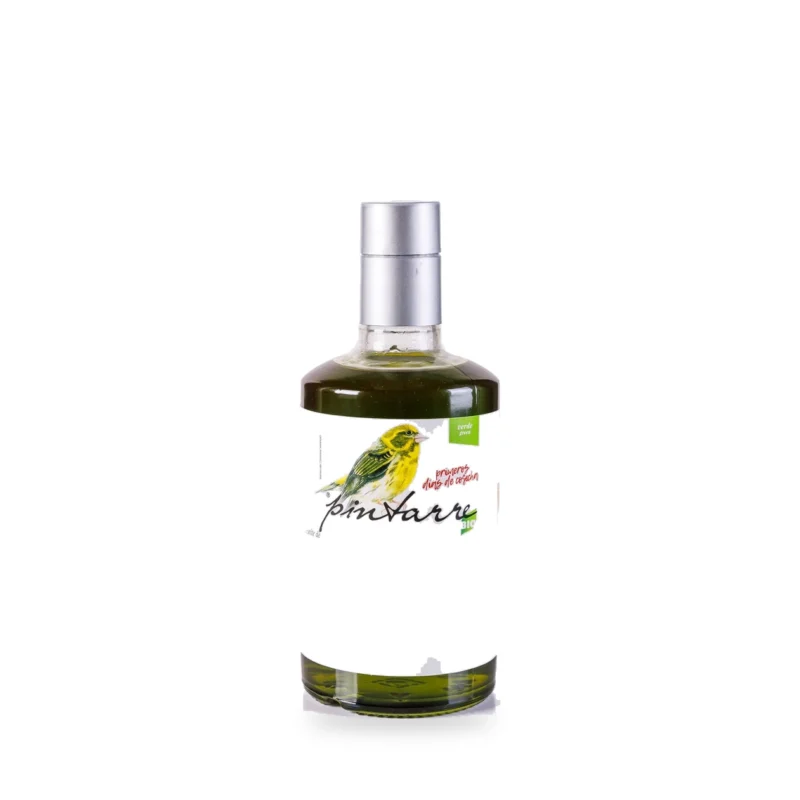
Some examples from our selection are Pintarré Early Harvest, Jabalcuz Early Harvest Picual and Elogio Premium 2026/2027 harvest, all from Jaén.
From olive to bottle: how new harvest olive oil is made
The quality of a new harvest olive oil is decided in a few hours. Olives start to deteriorate as soon as they leave the tree, so mills aiming for top quality work against the clock.
- Picking. The olives are taken straight from the tree, with shakers, straddle harvesters or poles, without mixing them with fruit that has fallen to the ground.
- Transport and cleaning. The fruit reaches the mill the same day. There, leaves and twigs are removed and the olives are washed if needed.
- Milling. A hammer mill crushes the whole olive, stone and all, into a paste.
- Malaxing. The paste is stirred slowly so that the tiny droplets of oil come together. For the best oils, the temperature is kept below 27 °C: this is what is called cold extraction.
- Separation. A horizontal centrifuge (decanter) separates the oil from the water and the solids.
- Settling or filtering. The oil is left to rest or is filtered to remove moisture and suspended particles.
- Storage. It is kept in stainless steel tanks, often under a nitrogen atmosphere, until it is bottled.
Every step affects the result, and none of them can correct a mistake made earlier: an olive that waited too long or a paste that got too warm will always show in the glass. That is why two oils of the same variety and the same new harvest can be very different depending on how the olives were handled.

When it comes to filtering, opinions vary. Some producers sell unfiltered oil during the first few weeks, cloudier and very aromatic. It is a delicious product, but it is best enjoyed soon, because the suspended particles speed up its deterioration. We explain this in our article on acidity and olive oil quality.

Why buy new harvest olive oil
Buying new harvest olive oil has clear advantages if you are looking for flavour and quality:
- More aroma. The volatile compounds responsible for fruitiness are at their highest at the start of the season and decrease over time.
- More polyphenols. Freshly made oils, especially early harvest ones, keep more phenolic compounds, which are responsible for bitterness and pungency.
- More life ahead. A new harvest olive oil arrives in your kitchen with all its potential and will keep it for many months if you store it well.
- More variety to discover. Every season is different, and tasting the new harvest is the best way to find out what the year in the grove was like.
Unlike wine, olive oil does not improve with time in the bottle, so there is no reason to save a good bottle for later. Over the months it slowly and naturally loses aroma. If an oil was well made and is kept away from light and heat, it will still be excellent for more than a year, but it will never again be as intense as in its first weeks.
And last season’s oil?
It is still a good buy as long as it is within its best before date and has been stored well. It is usually milder and rounder, which many people prefer for everyday cooking.
How to spot new harvest olive oil on the label
EU rules do not require the season to appear on the label, but more and more producers include it. These are the details that help you tell whether an oil is new harvest olive oil:
- Season or harvest year. If it says “2026/2027 Harvest”, you know exactly which season it comes from.
- Best before date. This is usually set between 18 and 24 months after bottling. A distant date shows recent bottling, although it does not tell you when the oil was made.
- Batch number. Some mills encode the bottling date or the original lot in the batch number.
- Terms such as “early harvest”, “first day of harvest” or “veraison”. They indicate oils from the start of the season, although their use is not specifically regulated.
In our shop we show the harvest on the page of every oil. This season you will see “2026/2027 Harvest” on oils already made with this year’s olives.
If you want to know how long an oil lasts once opened and how to read the best before date, we explain it in our guide to how to store olive oil and its shelf life.
How to choose your new harvest olive oil
With so many new oils arriving at once, choosing can seem difficult, especially if you are buying from abroad and cannot taste before you buy. These questions will help you get it right:
What will you use it for?
If you mainly want it for toast, salads and raw dishes, look for an early harvest oil with intense fruitiness. If you will use it every day for cooking, stews or frying, a large format of a balanced oil will be better value.
Do you like intense or mild flavours?
Picual and Cornicabra are the most powerful varieties, with marked bitterness and pungency. Arbequina is the sweetest and easiest for beginners. Hojiblanca and blends (coupages, mixes of several varieties) sit somewhere in between.
How much oil do you use?
Buy a size you can finish within a few months once opened. For a family that cooks every day, 3 or 5 litre tins are practical and protect the oil well from light. To discover varieties, 250 or 500 ml bottles are better: you can open several at once and compare them side by side without worrying about any of them going stale.
Is it a gift?
New harvest oils make an excellent gift in autumn and at Christmas. A gift box with two or three varieties lets people compare styles and usually surprises even those who think all oils taste the same. You will find ideas in our guide to olive oil gifts.
Myths about “first pressing” and new oil
A few ideas circulate around the new harvest that are worth clearing up:
“First cold pressing”
Today almost no oil is made with presses. Modern mills use centrifuges, and the oil is extracted in a single pass, so there is no “second pressing”. EU rules reserve the term “first cold pressing” for the traditional hydraulic press system, and use “cold extraction” for the modern system. In both cases, the temperature must stay below 27 °C during the process.
“The greener the colour, the better the oil”
Colour depends on the variety and the ripeness of the olives, not on quality. An early harvest oil is usually greener because of its chlorophyll content, but a golden oil can be just as excellent. That is why professional tastings use blue glasses that hide the colour.
“New oil is too strong for cooking”
On the contrary: its intensity is best appreciated raw, but extra virgin olive oil is very heat-stable and can be used for cooking, stewing and frying. If you prefer a milder profile for every day, choose varieties such as Arbequina or oils from a later harvest.
How to store new harvest olive oil
Olive oil has three enemies: light, heat and oxygen. To keep your new harvest olive oil fruity for as long as possible, follow these guidelines:
- Keep it in a cool, dark place, away from the hob, the oven and windows.
- Choose opaque or dark glass bottles, tins or bag-in-box. Clear glass lets light through.
- Close the bottle tightly after each use to limit contact with air.
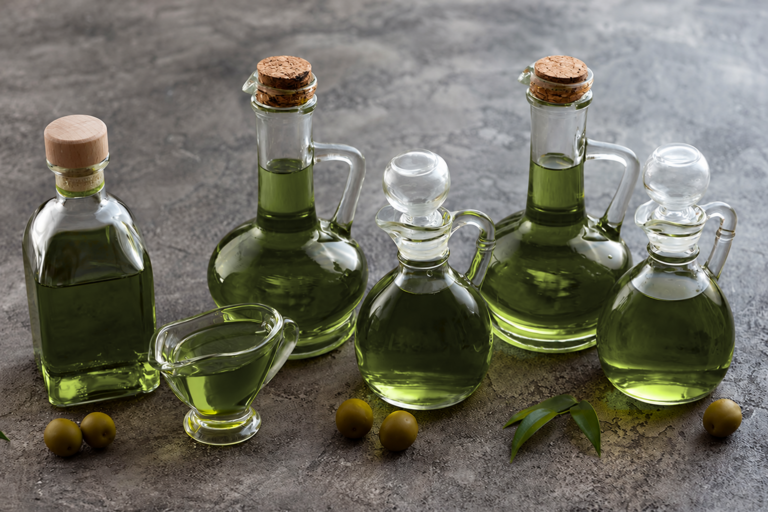
- If you buy large formats, decant a small amount into a clean oil cruet and keep the rest tightly closed.
- Once opened, try to use it within a few months to enjoy all its aroma.
There is no need to keep it in the fridge. If the oil gets very cold it may turn cloudy or solidify, which is harmless and disappears when it returns to room temperature.

How to use an early harvest oil in the kitchen
A new harvest olive oil deserves to take centre stage. Its aromas are at their most delicate when the oil is raw, so the simplest dishes are often the best way to enjoy it. Here are some simple ways to make the most of it:
- Freshly toasted bread. The classic way to taste a new oil: just bread, oil and, if you like, a pinch of sea salt flakes.
- Salads and roast vegetables. Bitterness and pungency balance the sweetness of tomato, peppers or roast onion.
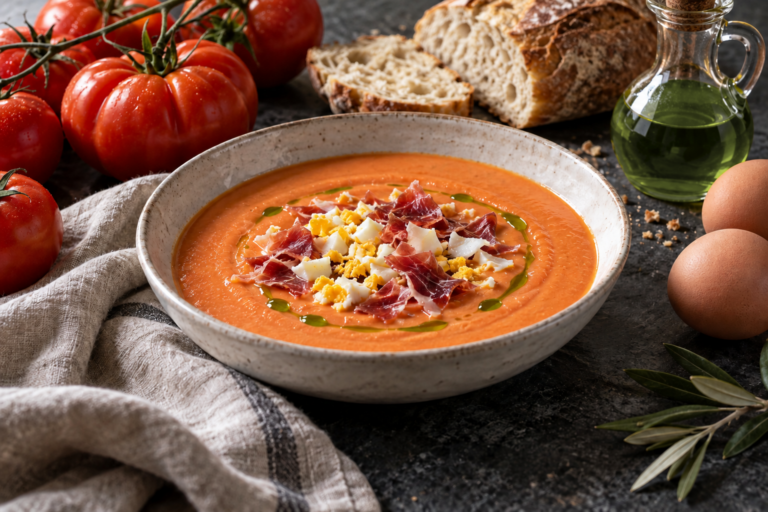
- Gazpacho, salmorejo and soups. Add the oil at the end so its fruitiness comes through. Salmorejo is a thick, chilled tomato and bread soup from Córdoba.
- Griddled fish and meat. A drizzle of raw oil over the finished plate lifts the flavour.
- Baking. A mild Arbequina oil replaces butter in sponge cakes and magdalenas, small Spanish muffins.
If you are looking for ideas, on our blog you will find recipes with extra virgin olive oil for every season.
The 2026/2027 new harvest is here. Discover the early harvest oils from our mills in Jaén, Córdoba and the rest of Spain, with fast dispatch within 24/48 h from Spain, delivered by UPS to the UK and across Europe.
Frequently asked questions about new harvest olive oil
When does new harvest olive oil reach the shops?
The first early harvest oils are usually available in late October or November. Most new harvest oils arrive between November and December.
Is early harvest oil better than late harvest oil?
It is neither better nor worse, just different. Early harvest oil is more intense, green and peppery; late harvest oil is milder and sweeter. Both can be excellent extra virgin olive oils.
How long does new harvest olive oil keep?
Stored well and unopened, it keeps its quality until the best before date, usually 18 to 24 months from bottling. Once opened, ideally use it within a few months.
Why does new oil catch the back of the throat?
Because of its phenolic compounds, which are more abundant in freshly made oils and in early harvest oils. Pungency is a positive attribute when tasting olive oil.
Can new harvest olive oil be cloudy?
Yes, if it has not been filtered. During the first weeks some producers sell unfiltered oil, cloudier and more aromatic. It is perfectly fine to use, but best enjoyed soon.
The new harvest is the best opportunity to rediscover extra virgin olive oil. Taste several oils from the 2026/2027 season, compare varieties and choose your favourite for the rest of the year. Whether you prefer the green intensity of an early harvest Picual or the gentle sweetness of a later Arbequina, the new harvest is the moment when every oil is at its liveliest.