Organic olive oil is more and more in demand, but it also raises plenty of questions. Is it different from a conventional oil? Does it taste better? Why does it cost a little more? How do I know it is genuinely organic? In this guide we explain what it means for an oil to be organic under EU rules, how an organic olive grove is farmed, how organic olive oil is certified, what sets it apart from conventional oil and how to choose a good organic olive oil for your kitchen.
Contents
What organic olive oil is
An organic olive oil is one made from olives grown and processed according to the rules of organic farming. In the European Union, those rules are set out in Regulation (EU) 2018/848, which governs the production and labelling of organic products.
The terms “organic”, “ecological” and “biological”, and their abbreviations “eco” and “bio”, are protected. They can only be used on products that comply with the regulation and have been certified by an authorised control body. It is not a marketing label but an official system backed by inspections, and that is what gives the word “organic” its value when you see it on a bottle.
It is important to understand that “organic” is not a quality category for the oil. An organic olive oil can be extra virgin, virgin or even a lower category. The category depends on the analyses and the tasting, just as for any other oil. That is why the ideal is to look for an organic extra virgin olive oil, which brings together the best of both worlds.
How an organic olive grove is farmed
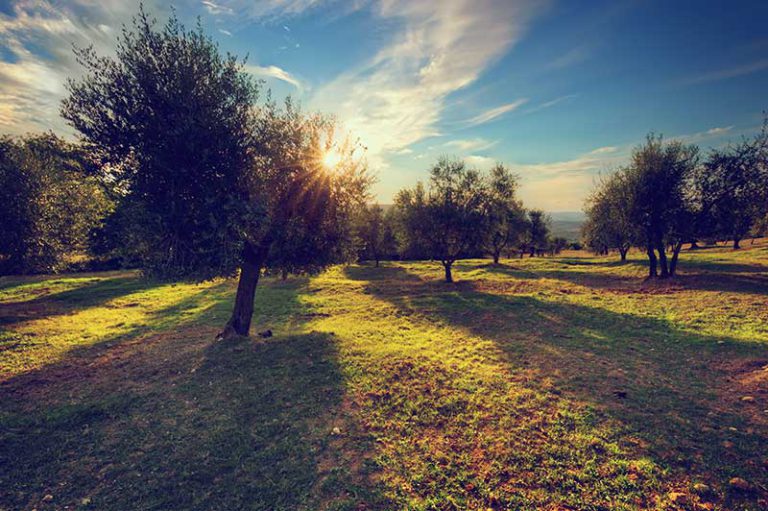
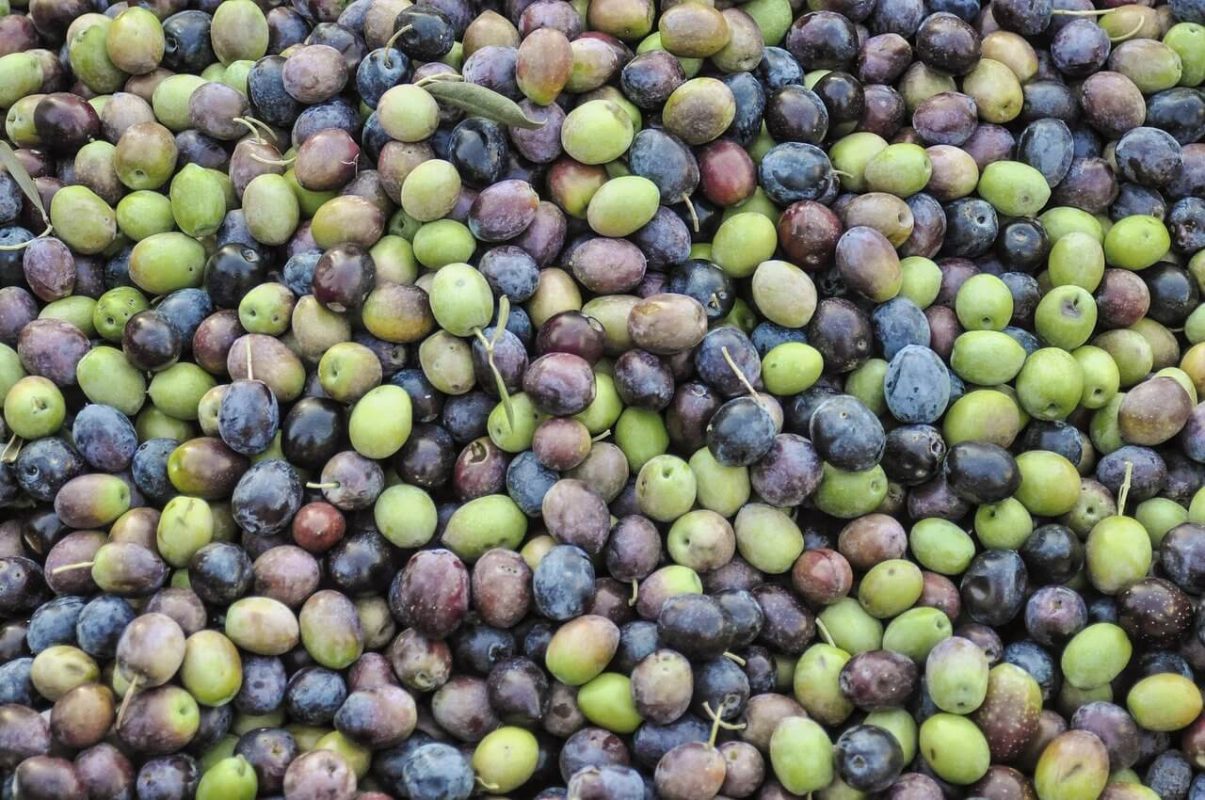
Organic farming works with nature rather than against it. Instead of solving every problem with a product, it tries to build a grove that keeps itself in balance. In the olive grove, this translates into a series of practices:
- No synthetic chemicals. No synthetic herbicides, insecticides or chemical fertilisers are used. Only certain authorised substances of natural origin are allowed, under strict conditions.
- Soil fertility. The soil is fed with organic matter: composted manure, shredded prunings, green manures and the mill’s own composted olive pomace.
- Cover crops. Grass is left to grow between the trees to protect the soil from erosion, retain water and shelter beneficial insects.
- Natural pest control. The presence of birds, bats and insects that feed on pests is encouraged, and traps and biological methods are used.
- Biodiversity. Hedges, field margins with natural vegetation and ponds help keep the ecosystem in balance.
- No genetically modified organisms. They are banned throughout the process.
A grove switching from conventional to organic farming must go through a conversion period, which for permanent crops such as olives is usually three years before harvest. During that time the organic rules apply, but the oil cannot yet be sold as organic olive oil. It is a real commitment for the farmer, who takes on the extra work and cost for years before seeing any reward on the label.
Organic olive oil at the mill
The organic rules do not stop in the field. The mill that makes organic olive oil must also be certified and meet several conditions:
- Organic olives must be processed separately from conventional ones, on different lines or at different times, to avoid mixing.
- The facilities must be cleaned before organic olives are processed.
- Cleaning products and processing aids must be authorised.
- The oil is stored in identified tanks and every movement is recorded, to guarantee traceability from grove to bottle.
Otherwise, the process is the same as for any extra virgin olive oil: milling, malaxing at low temperature, centrifuging and storage protected from light and oxygen. As always, the final quality depends on how carefully the olives are handled and on the work at the mill. Being organic does not excuse a careless harvest or a slow journey to the mill.
Certification and control of organic olive oil
No producer can declare on their own that their oil is organic. Every operator in the chain, from farmer to bottler, must be registered in the control system and inspected at least once a year.
In Spain, each autonomous region designates its competent authority, which may be an organic farming council or committee or an authorised private control body. Inspectors check field records, purchase invoices, stock and facilities, and may take samples to test for residues of non-permitted products.
If everything is in order, the operator receives a certificate allowing them to use the term “organic” and the EU logo on their products. That certificate must be renewed periodically, so the guarantee is never a one-off: it is checked again and again.
This control system is what sets a certified organic olive oil apart from any oil that is simply advertised as “natural”. Every bottle can be traced back to the plot the olives came from, and any breach can mean losing certification. For you as a consumer, this means an independent, verifiable guarantee that does not depend only on the producer’s word.
How to recognise organic olive oil on the label
To find out whether an oil is really organic, look for these elements on the pack:
- The EU organic logo. The so-called “Euro-leaf”: a leaf made of white stars on a green background. It is compulsory on organic products packed in the EU.
- The control body code. It appears next to the logo, in a format such as “ES-ECO-0XX-XX”, where “ES” stands for Spain.
- The origin of the raw materials. A statement such as “EU Agriculture”, “non-EU Agriculture” or “Agriculture Spain”.
- The protected terms. “Organic”, “ecological”, “biological”, “eco” or “bio” in the product name.
There may also be logos from regional or private certifiers, in addition to the EU one. If an oil claims to be organic but carries neither the Euro-leaf nor the control code, be wary. A genuine organic olive oil has nothing to hide and always shows them clearly.
Beware of imitations
Terms such as “natural”, “traditional”, “artisan” or “untreated” are not the same as organic. They are not subject to the same official control.
Differences between organic olive oil and conventional oil
The fundamental difference lies in how it is produced, not necessarily in how it tastes. This table sums up the main points:
| Aspect | Organic olive oil | Conventional oil |
|---|---|---|
| Fertilisation | Organic matter and authorised natural fertilisers | Synthetic chemical fertilisers allowed |
| Pest and weed control | Biological methods and authorised natural substances | Authorised synthetic herbicides and pesticides allowed |
| Certification | Compulsory, with annual inspections | No organic certification required |
| Traceability | Full records from field to bottle | As required by general rules |
| Quality category | Depends on analyses and tasting | Depends on analyses and tasting |
| Flavour | Depends on variety, harvest and processing | Depends on variety, harvest and processing |
Flavour is influenced far more by the variety, the timing of the harvest and the work at the mill than by the farming system. An early harvest organic olive oil will be intense and green; a late-harvest one, milder. We explain this in our guide to olive oil varieties.
Why organic olive oil costs more
An organic olive oil usually costs a little more than a conventional oil of similar quality. There are several reasons, and all of them come down to the extra work and care involved:
- Lower yields. Without synthetic fertilisers, olive trees usually produce fewer kilos of olives per hectare.
- More labour. Controlling weeds and pests with natural methods takes more work.
- Certification costs. Inspections and analyses have a cost that the producer bears.
- Separate processing. Processing organic olives separately and maintaining traceability complicates the mill’s logistics.
- Risk. A bad pest year can hit an organic grove harder, as it has fewer tools to fight back.
In return, you get an oil produced with practices that look after the soil, water and biodiversity, with a control system to guarantee it. For many buyers, that small difference in price is a fair reward for the extra care that goes into every bottle.
Organic and biodynamic: what is the difference?
Biodynamic farming starts from organic farming and adds its own approach. It treats the farm as a living, self-sufficient organism, uses specific preparations made from plants and minerals and follows a work calendar based on natural cycles.
Its certification is private, for example Demeter, and comes on top of official organic certification. In other words, a certified biodynamic oil is also an organic olive oil, but not the other way round. Some Spanish producers make biodynamic oils that are highly prized for their complete respect for the environment. If you enjoy discovering how farming shapes an oil, comparing an organic and a biodynamic bottle from similar areas is a fascinating exercise.
Myths and facts about organic olive oil
“Organic oil is healthier”
Organic certification refers to how the oil is produced, not to its effects on health. An extra virgin olive oil, organic or not, provides the same unsaturated fats and natural polyphenols, the amount of which depends mainly on the variety and the harvest.
“Organic oil always tastes better”
Not necessarily. Flavour depends on the variety, the timing of the harvest and the processing, exactly as it does for conventional oils. There are extraordinary organic oils and merely decent ones, just as with conventional oils.
“Organic means completely untreated”
No. Organic farming allows some treatments with authorised natural substances, such as copper in limited doses. What it does not allow are synthetic chemical products.
“All oil from traditional groves is organic”
False. A grove can be traditional and old and still use synthetic products. It is only organic if it is certified, however picturesque the trees may look.
How to choose a good organic olive oil
- Look for extra virgin. Organic extra virgin olive oil: the combination of respectful farming and top quality.
- Check for the Euro-leaf and the control code. They are the guarantee that the oil is certified.
- Look at the harvest. The more recent, the more aroma. Organic oils from the new harvest arrive between October and December.
- Choose the variety to suit your taste. Organic Picual if you like intense flavours; organic Arbequina or Hojiblanca if you prefer something milder.
- Choose containers that protect from light. Dark glass, tins or bag-in-box.
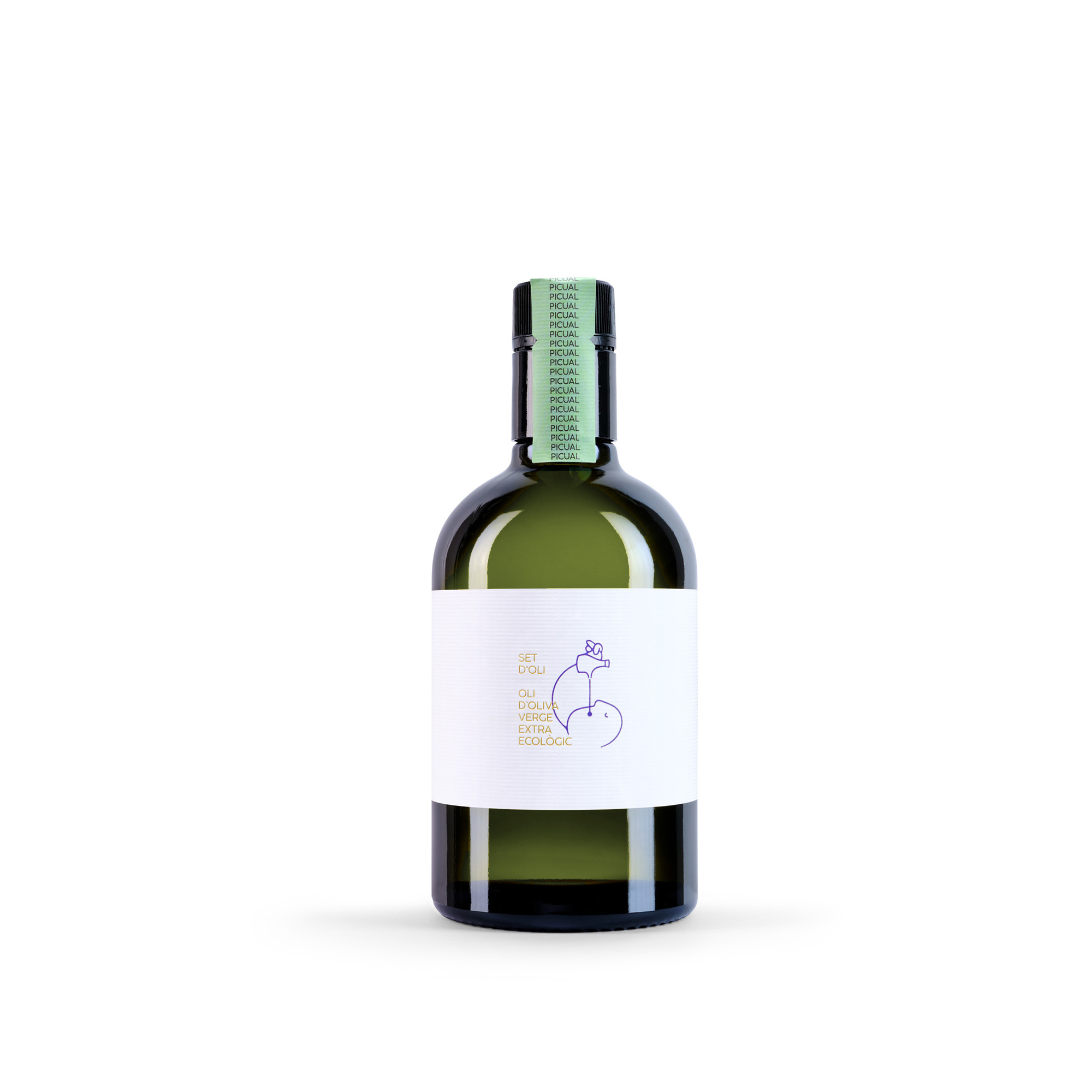
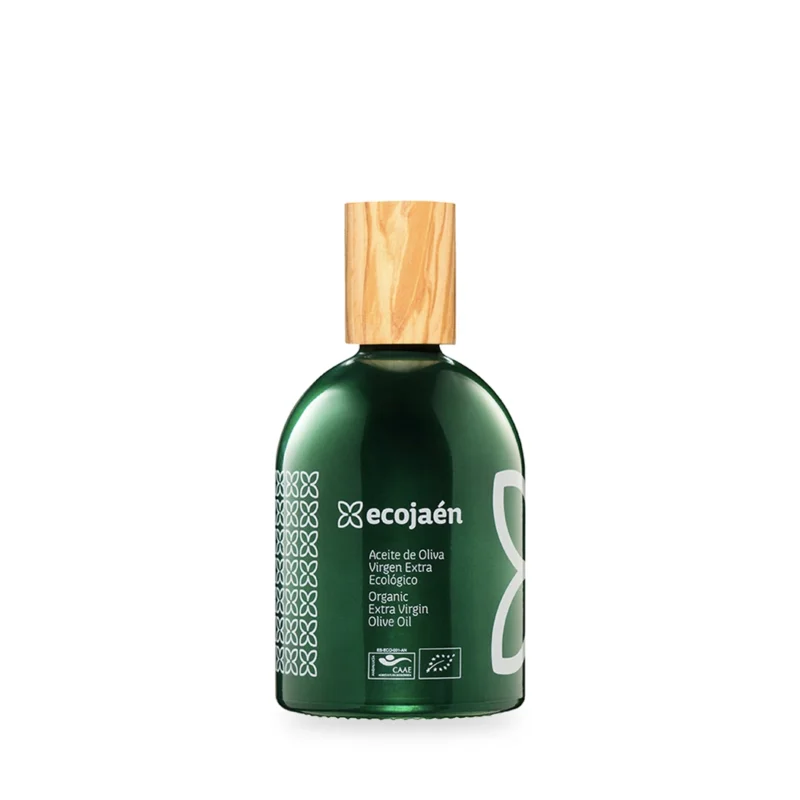
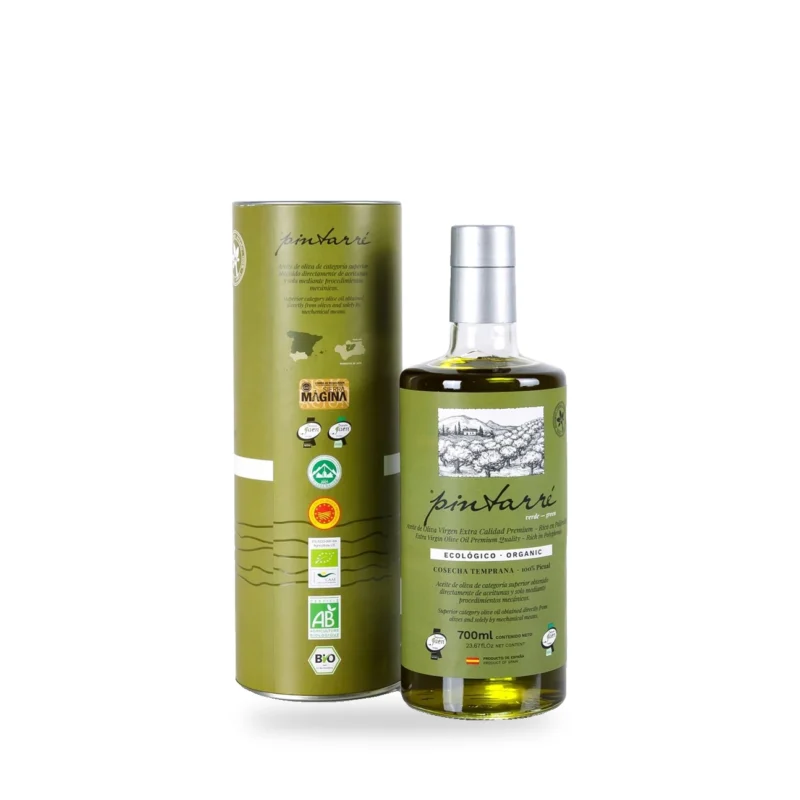
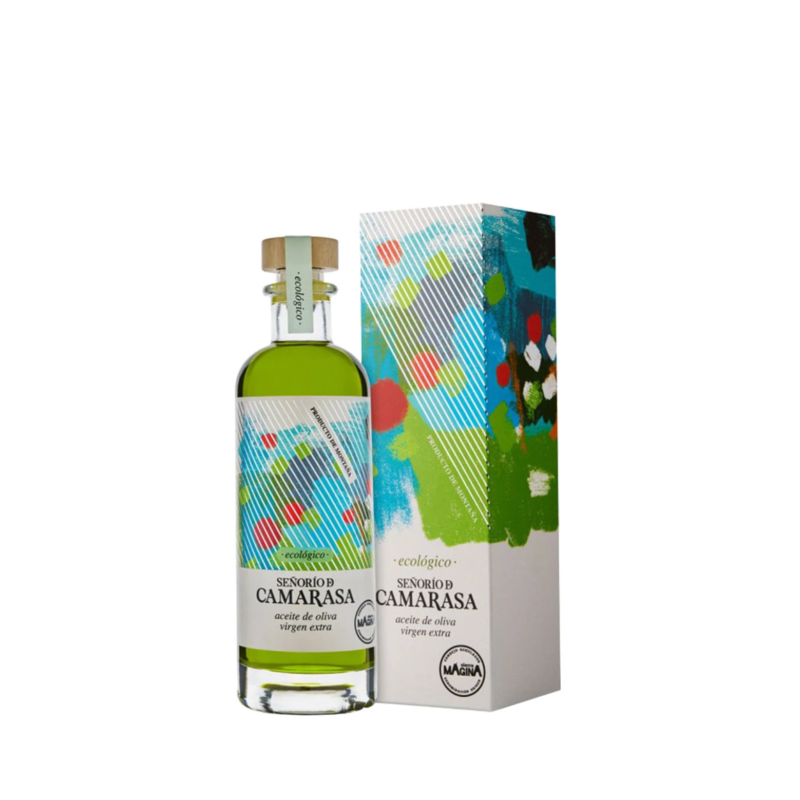
In our shop you will find organic olive oil from different areas and varieties: the organic Picual by Set D’Oli, Ecojaén with its olive wood stopper, organic Pintarré Early, organic Señorío de Camarasa and the organic oils from Oro del Desierto, in Almería.
Questions you can ask the producer
If you buy direct from a mill or from a specialist shop, these questions will help you get to know your organic olive oil better:
- Which variety and which harvest is the oil from?
- When were the olives picked and how long was it until they were milled?
- Which body certifies the oil as organic?
- Is the grove rain-fed or irrigated? Is it in the mountains or the lowlands?
- How is the oil stored until it is bottled?
A good organic olive oil producer will be delighted to answer. Transparency is one of the hallmarks of people who look after their olive groves well, and the answers will help you understand exactly what you are tasting.
The organic olive grove and the environment
Choosing an organic olive oil is also a way of supporting a farming model that looks after the environment. Organic practices have positive effects on several fronts:
- Soil. Cover crops and organic matter reduce erosion, one of the great problems of olive groves on slopes, and improve the soil’s ability to hold water.
- Water. Because no synthetic herbicides or chemical fertilisers are used, there is less risk of these products reaching rivers and aquifers.
- Biodiversity. Groves with grass, hedges and natural field margins are home to more birds, pollinating insects and beneficial wildlife.
- Circular economy. Prunings and pomace from the mill return to the field as fertiliser, closing the cycle.
Many organic olive oil producers go beyond what the regulation requires: they put up nest boxes, restore springs and ponds or look after centuries-old olive trees. Getting to know the producer is the best way to find out what lies behind each bottle, and to choose an organic olive oil whose values match your own.
Organic olive oil with a designation of origin
Organic certification and a Protected Designation of Origin (PDO) are compatible. The first guarantees how the oil was grown and made; the second, where it comes from and that it meets the quality rules of its area.
An organic olive oil with a designation of origin carries both seals on the label: the Euro-leaf with its control code and the designation’s logo. It is a double guarantee much appreciated by buyers looking for oils with identity and full traceability. In Jaén, for example, the Segura and Cazorla mountains have a long tradition of organic mountain olive groves; we tell you about it in our guide to Jaén olive oil.
How to store organic olive oil
An organic oil is stored just like any extra virgin olive oil: in a cool, dark place, tightly closed and away from the hob. Light, heat and air are its enemies, whatever the farming system. All the care that went into farming the grove would be wasted if the bottle ended up next to a hot oven or a sunny window.
Once opened, use it within a few months to enjoy all its aroma. If you want more details about the best before date and containers, see our guide on how to store olive oil and its shelf life.
Organic olive oil in the kitchen
An organic olive oil is used exactly like any other extra virgin: raw, for cooking, for frying and in baking. Choosing it has more to do with your values and the flavour you are looking for than with how you use it in the kitchen. A large tin of organic olive oil for everyday cooking and a smaller premium bottle for raw dishes is a very practical combination.
To get the most out of a good organic oil, taste it raw first, on bread or in a simple salad, to appreciate all its nuances. You will find more ideas in our guide to the uses of olive oil.
Certified organic extra virgin olive oils. Picual, Arbequina, Hojiblanca and blends from mills committed to organic farming, with fast dispatch within 24/48 h from Spain.
Frequently asked questions about organic olive oil
Are “organic”, “ecological” and “biological” the same thing?
Yes. In the European Union they are equivalent, protected terms and can only be used on certified products.
Is organic olive oil always extra virgin?
No. “Organic” describes how it was produced; the extra virgin category depends on the analyses and the tasting. Look for both.
How do I know if an oil is really organic?
Check that it carries the EU organic logo and the control body code, in a format such as “ES-ECO-…”.
Why is organic oil more expensive?
Because of lower yields in the grove, more labour, certification costs and separate processing.
Can you fry with organic olive oil?
Yes. An organic extra virgin olive oil is just as heat-stable as a conventional one of the same variety.
Organic olive oil is a way of enjoying a great oil while supporting a farming model that looks after the olive grove. Choose a certified one from the latest harvest and discover its flavour. Whether you prefer an intense organic Picual or a gentle organic Arbequina, every bottle supports the farmers who look after the land, the water and the wildlife of the olive groves.